logo

Top Mineral Wool Suppliers for Global Buyers

Mineral Wools are moving from a technical specification to a strategic purchasing decision. For global buyers, the challenge is not simply finding insulation. It is comparing thermal performance, product consistency, delivery capacity, and documentation across suppliers. A pallet arriving late can delay a project; a datasheet with unclear test conditions can make comparisons harder. Small details matter.

The market sits within a larger energy challenge. The United Nations Environment Programme’s 2023 Global Status Report for Buildings and Construction reported that buildings accounted for 34% of global energy demand and 37% of energy- and process-related CO₂ emissions in 2022. These figures describe the buildings sector, not mineral wool’s individual impact. That distinction matters. Mineral wool can support energy-efficient building envelopes, but results depend on design, installation, and operating conditions. The International Energy Agency has also described energy efficiency as “the first fuel,” a phrase associated with Executive Director Fatih Birol. It is a useful reminder, though not a product endorsement.

This guide examines leading Mineral Wools suppliers through a buyer-focused lens: product range, technical evidence, geographic reach, and service reliability. Supplier claims deserve scrutiny. Specifications may look comparable on paper, yet installation needs and local conditions differ. There is no perfect shortlist. The goal is a better-informed one, grounded in evidence rather than polished brochures.

Top Mineral Wool Suppliers for Global Buyers

Mineral Wool Basics: Stone Wool, Glass Wool, and Their Main Uses

Top Mineral Wool Suppliers for Global Buyers

Mineral wool is a broad term for fibrous insulation made from mineral-based materials. Stone wool is produced from melted rock, while glass wool uses sand and recycled glass. Both trap air between fine fibers, slowing heat flow and helping reduce sound transfer. They are not identical. Stone wool is typically denser and can suit fire-resistant wall or roof assemblies. Glass wool is often lighter and easier to fit around pipes or between framing members. Check product data rather than relying on general descriptions.

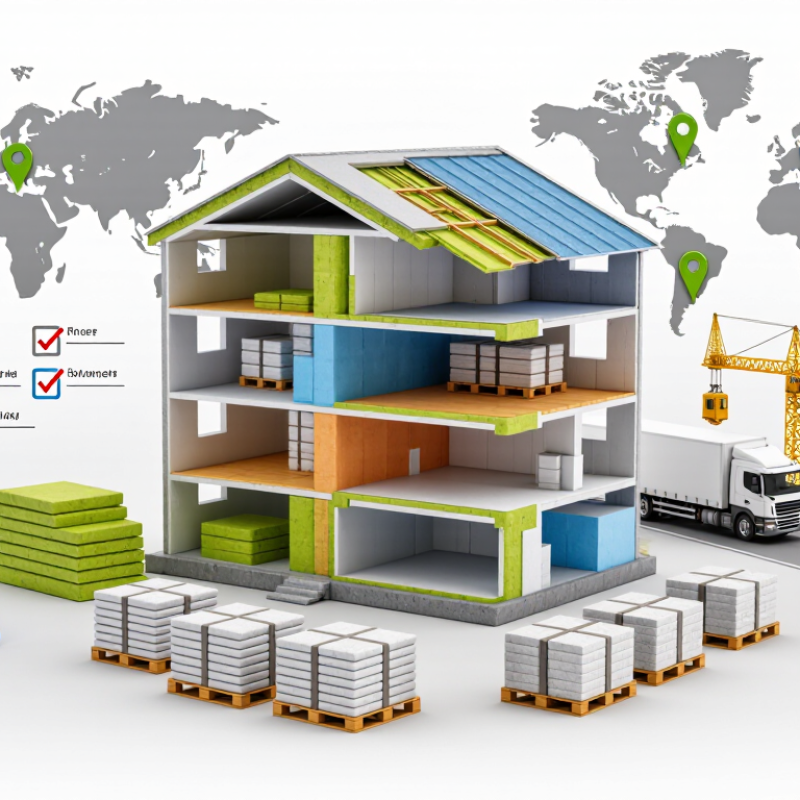
For global buyers, the intended use matters as much as the material. A roof exposed to wind, a partition needing sound control, and a service pipe each call for different thicknesses and performance ratings. Compare thermal conductivity, fire classification, moisture behavior, and stated installation requirements. Also confirm dimensions and packaging before shipment; a product that fits one market’s standard framing may need cutting elsewhere. Small details matter. Installation gaps can weaken real-world performance, even when the specification looks strong.

Tips: Ask suppliers for current technical sheets and test details for the exact product grade. Check that handling guidance is clear, and plan protective clothing because loose fibers can irritate skin. Then verify a sample on site. It may reveal awkward cutting or fit issues that paperwork cannot.

Global Supplier Landscape: Leading Manufacturers and Regional Production Hubs

The global mineral wool supplier landscape is shaped by access to raw materials, energy, transport, and construction demand. Large production hubs often sit near basalt quarries or industrial regions, where steady inputs support continuous manufacturing. Glass wool plants may instead benefit from nearby recycled-glass supplies. Location matters. Heavy, bulky products are costly to move, so suppliers commonly serve nearby markets before exporting farther.

Europe has an established network of producers and strong demand for energy-efficient buildings. East Asia combines large construction markets with substantial manufacturing capacity, while North America serves broad regional markets through plants positioned near major transport routes. Other regions are expanding production as insulation demand grows, but capacity, product ranges, and delivery times vary widely. A map can look reassuring. It may hide bottlenecks.

For buyers, a supplier’s regional footprint is only a starting point. Check whether the quoted facility actually makes the specified product, and ask about typical lead times, packaging, and available technical documentation. Compare density, thermal performance, and fire-test data using consistent standards. Port access can help, yet inland delivery may add cost or delay. Production networks also change with energy prices and maintenance schedules. Even experienced purchasers can misjudge this. Local references and recent shipment records offer a more grounded view than broad claims about regional capacity.

Top Mineral Wool Suppliers for Global Buyers — Global Supplier Landscape: Leading Manufacturers and Regional Production Hubs

A regional overview of mineral wool production and sourcing considerations. Mineral wool commonly includes glass wool and stone wool; availability and product specifications vary by facility and market.

Regional production hub Representative production markets Common product categories Regional supply characteristics Buyer considerations
Western and Central Europe Germany, France, Belgium, the Netherlands, Austria and the Czech Republic Glass wool and stone wool insulation for buildings, industry and technical applications A mature market with established manufacturing capacity, extensive distribution networks and a broad range of insulation applications. Check applicable European product standards, declared thermal performance, fire classification, environmental product documentation and delivery terms.
Northern Europe Denmark, Sweden, Finland and Norway Stone wool and glass wool products for building envelopes, roofs, partitions and industrial use Demand is shaped by cold-climate construction, energy-efficiency requirements and established building-insulation markets. Confirm suitability for local climate conditions, national building-code requirements, moisture-management design and project-specific fire performance.
Central and Eastern Europe Poland, the Czech Republic, Slovakia, Hungary and Romania Glass wool and stone wool insulation in batts, rolls, boards and other project-specific formats The region serves domestic construction markets and participates in cross-border trade within the wider European market. Compare transport costs, production lead times, local-language documentation, certification and the availability of the required product dimensions.
North America United States and Canada Fiberglass insulation and stone wool products for residential, commercial and industrial applications Supply is supported by large construction markets and regional distribution channels; product specifications and codes can differ between jurisdictions. Verify compliance with the relevant national and local standards, product labeling, fire and thermal ratings, and availability near the project site.
East Asia China, Japan and South Korea Glass wool and stone wool for buildings, industrial facilities, equipment and infrastructure A substantial manufacturing and end-use region with a wide range of local specifications and domestic supply channels. Confirm factory location, export documentation, test methods, product consistency, applicable certifications and whether quoted capacity is available for export.
South Asia India Glass wool and stone wool for construction, industrial insulation and technical applications Supply serves a growing domestic construction and infrastructure market, with product availability varying by application and location. Assess local standards, product testing, freight to the destination, seasonal lead-time variation and the supplier’s ability to meet project specifications.
Türkiye and adjacent markets Türkiye Stone wool and glass wool products for building and industrial insulation Geographically positioned to serve domestic demand and trade routes connecting Europe, the Middle East and nearby markets. Check destination-market certifications, customs requirements, currency and freight terms, and confirm that the product is approved for the intended application.
Other regional markets Production and conversion capacity also exists in additional countries; availability depends on product type and current plant operations. Products may include glass wool, stone wool, or locally converted insulation materials. Supply can be more dependent on imports, regional distributors and project-specific procurement arrangements. Request current evidence of manufacturing origin, capacity, technical data, compliance documents, and a confirmed delivery schedule before placing an order.

Note: This is a regional sourcing overview, not a company ranking or a complete directory of producers. Countries listed indicate representative production markets, not guaranteed current capacity or product availability. Buyers should verify plant origin, certifications, specifications and delivery schedules directly for each project.

Product Benchmarks: Typical Thermal Conductivity of 0.030–0.045 W/(m·K)

Top Mineral Wool Suppliers for Global Buyers

Thermal conductivity is a useful starting point when comparing mineral wool products. Typical values range from 0.030 to 0.045 W/(m·K), but the number alone does not tell the whole story. Lower conductivity can mean better heat resistance at a given thickness, yet performance depends on product density, thickness, and installation quality. A small gap around a pipe or wall joint can undermine a strong laboratory result.

Ask suppliers for test data that identifies the product type, measured thickness, and testing conditions. Compare like with like. A rigid board and a flexible blanket may serve different applications, even when their conductivity figures look similar. Moisture exposure and compression during shipping or installation also deserve attention. The specification sheet is helpful, but it cannot predict every jobsite condition. That is worth remembering.

Tips: Request recent technical data and a sample for handling checks. Confirm dimensions, packaging, and delivery consistency before placing a large order. For a real comparison, review the declared conductivity alongside fire performance and intended use. Small print matters. If a supplier cannot explain how its figures were measured, pause and ask again.

Quality and Compliance: EN 13162, ASTM C612, and Fire-Rating Requirements

For global buyers, mineral wool quality is more than a density figure on a quotation. EN 13162 covers factory-made mineral wool products for building applications, while ASTM C612 addresses mineral fiber block and board insulation. They are not interchangeable labels. Check the declared standard, intended use, thickness, dimensional tolerances, and thermal performance against the project specification. Details matter.

Ask suppliers for current test reports and product documentation that match the exact grade being offered. Confirm that stated values apply to the supplied product, not a similar variant with a different facing or density. Batch identification helps connect delivered pallets to production records. It sounds basic, but this step is easy to miss when schedules tighten.

Fire requirements need particular care. A material’s reaction-to-fire classification does not, by itself, establish the fire resistance of a wall, roof, or service assembly. Verify the required rating, test method, and assembly conditions with the project team. A tested system may depend on joints, fixings, and installation details. Paperwork can look tidy while leaving a gap. Buyers should resolve unclear scope before shipment, and revisit assumptions when local project requirements differ.

Top Mineral Wool Suppliers for Global Buyers — Quality and Compliance

A guide to interpreting European reaction-to-fire classes alongside the product-standard frameworks EN 13162 and ASTM C612.

The bars show the ordering of Euroclass reaction-to-fire classifications, from A1 (highest) to F (lowest); the vertical values are ordinal display indices, not test measurements. EN 13162 covers factory-made mineral wool products for building insulation, while ASTM C612 covers mineral fiber block and board thermal insulation. These product standards do not make Euroclass ratings directly interchangeable with ASTM E84 results. Buyers should verify product-specific declarations, test reports, and applicable local requirements.

How Buyers Compare Suppliers: Capacity, Certifications, Logistics, and Cost

Global buyers should compare mineral wool suppliers by dependable output, not headline capacity alone. Ask how much material is available each month, and whether production can handle changes in thickness, density, or facing. A supplier may quote a large annual figure yet have limited room for urgent orders. Request a sample production schedule. Check that it matches the proposed delivery plan.

Certifications matter, but buyers should verify what each document covers. Confirm the product type, test method, issuing body, and validity dates. Then compare logistics: pallet dimensions, protective wrapping, loading limits, and transit time to the destination port or site. A low factory price can lose its appeal when bulky shipments need extra handling or arrive in damp packaging. Get freight and insurance assumptions in writing. Small details count.

Cost comparisons work best when quotes use the same specifications and delivery terms. Include testing, packaging, replacement procedures, and likely lead times in the comparison. Ask suppliers how they manage shortages or quality disputes, and look for clear answers rather than broad promises. One metric can mislead. I would still treat a spreadsheet as a starting point, not a verdict; actual delivery records and consistent samples often reveal gaps that a polished quote cannot.