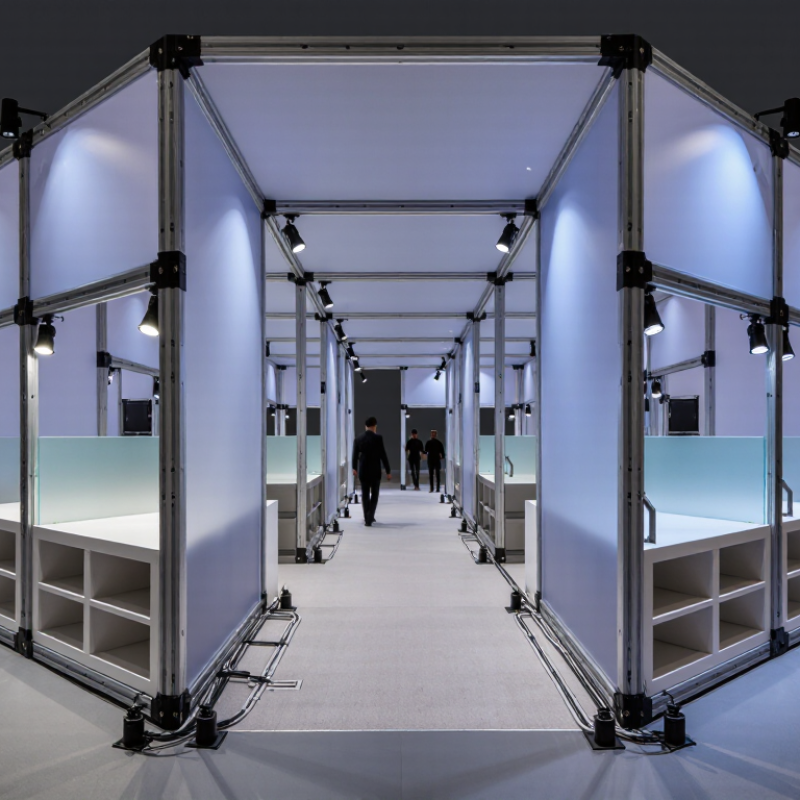
| Modular System Compatibility | Compatible with reusable aluminum-frame, SEG fabric, panel, and hybrid booth systems. | A compatible system makes it easier to expand, reconfigure, repair, and reuse the booth for different exhibitions. | Request system specifications, connection details, component dimensions, and examples of different booth layouts. | High |
| Booth Size Flexibility | Able to support common footprints such as 10 × 10 ft, 10 × 20 ft, 20 × 20 ft, and custom configurations. | Flexible sizing helps the exhibitor adapt the same investment to different venue spaces and event requirements. | Compare layout drawings and confirm whether existing components can be reused in multiple booth sizes. | High |
| Material Quality | Structural components should use suitable aluminum profiles, stable connectors, durable graphics, and finished surfaces appropriate for repeated use. | Material quality affects structural stability, appearance, transportation life, and the number of times the booth can be reused. | Review material samples, profile specifications, connector samples, surface finishes, and product inspection records. | High |
| Graphic Printing Quality | Graphics should have accurate color reproduction, clean edges, consistent tension, and print resolution suitable for close viewing. | Graphics are one of the most visible elements of a booth and directly influence brand presentation and visitor perception. | Request physical fabric or panel samples, color proofs, print specifications, and photographs taken at exhibition distance. | High |
| Structural Safety | The design should include stable joints, appropriate load distribution, secure shelving, and suitable anchoring for the venue conditions. | Safe construction reduces the risk of movement, falling components, product damage, and installation problems. | Ask for engineering drawings, load information, installation instructions, and venue-specific safety documentation where required. | High |
| Fire and Material Compliance | Fabrics, panels, electrical components, and finishes should meet the applicable fire-safety and venue regulations. | Compliance is often mandatory for trade show approval and helps prevent delays, rejection, or costly on-site replacement. | Request current test reports, certificates, material declarations, and confirmation of compliance with the destination market. | High |
| Installation and Dismantling | A clear assembly sequence, labeled parts, reusable fasteners, and practical installation instructions should be provided. | Efficient installation can reduce labor hours, on-site service costs, and the risk of assembly errors. | Review an installation manual, request an assembly video, and confirm whether technical support is available during setup. | High |
| Lead Time | Allow adequate time for design approval, sampling, production, quality inspection, packing, and international delivery. | Trade show deadlines are fixed, so production and logistics delays can affect participation and increase expedited shipping costs. | Obtain a written schedule covering artwork approval, sample production, manufacturing, inspection, dispatch, and estimated transit. | High |
| Quality Control Process | Quality checks should cover dimensions, connectors, graphics, lighting, hardware, packaging, and final assembly readiness. | A documented inspection process helps identify defects before the shipment leaves the factory. | Request a quality checklist, inspection photos, sample approval records, and a pre-shipment inspection option. | High |
| Packaging and Protection | Reusable crates, padded cases, protective wrapping, moisture protection, and clearly marked component packs. | Proper packaging reduces damage during handling, international transport, storage, and repeated exhibition use. | Review packaging photographs, packing lists, crate materials, impact protection, and replacement procedures for damaged parts. | High |
| Shipping Capability | Experience with export documentation, commercial invoices, packing lists, customs requirements, and delivery to exhibition venues. | Accurate logistics coordination helps avoid customs holds, missed delivery windows, and unexpected handling charges. | Confirm shipping terms, estimated cargo volume, documentation responsibilities, insurance options, and delivery arrangements. | High |
| Customization Capacity | Ability to customize dimensions, storage, counters, meeting rooms, lighting, product displays, and branded graphics. | Customization allows the booth to support specific marketing goals while maintaining the benefits of a modular structure. | Review technical drawings, customization limits, sample projects without confidential information, and revision procedures. | Medium |
| Electrical and Lighting Integration | Lighting and power elements should be integrated neatly, safely, and in accordance with the venue’s electrical requirements. | Well-planned lighting improves product visibility, visitor flow, and overall booth presentation. | Request lighting layouts, power specifications, cable-management details, and confirmation of local electrical compatibility. | High |
| Reusability and Storage | Components should be durable, replaceable, easy to label, and practical to store between events. | Reusability can lower the average cost per exhibition and reduce material waste over the booth’s service life. | Ask for a component inventory, replacement-part policy, storage recommendations, and a reuse plan for future booth sizes. | Medium |
| Communication and Project Management | A designated project contact, clear approval milestones, organized documentation, and timely responses to technical questions. | Effective communication reduces misunderstandings in artwork, measurements, production details, and delivery requirements. | Evaluate response quality during the quotation stage and request a sample project timeline with approval checkpoints. | High |
| Warranty and After-Sales Support | Written coverage for manufacturing defects, replacement parts, repair procedures, and support after delivery. | A clear support policy protects the investment and helps resolve issues before or during future exhibitions. | Review warranty terms, exclusions, response times, spare-part availability, and the process for reporting defects. | High |
| Total Cost of Ownership | Assess product price together with design, printing, packing, shipping, installation, storage, repairs, and future reuse. | The lowest initial quotation may not provide the lowest overall cost when logistics and repeated use are included. | Request an itemized quotation and compare the estimated cost per event over the planned usage period. | High |
| Sustainability Considerations | Prioritize reusable structures, replaceable graphics, recyclable materials where practical, and reduced single-use packaging. | Reusable modular systems can reduce waste and support exhibitors’ environmental objectives. | Ask for material information, reuse guidance, recycling details, packaging options, and estimated service life. | Standard |


 Your message must be between 20-3,000 characters!