| 01 | Check the fiber composition | Wool percentage, secondary fiber type, and fiber declaration | Compare the stated blend, such as 30%–80% wool with polyester, rayon, acrylic, or other fibers. The exact ratio affects warmth, handle, price, shrinkage, and durability. | Fiber-content specification, test report when required, and a signed pre-production sample approval | Composition is described only as “wool-like” or “premium blend” without percentages |
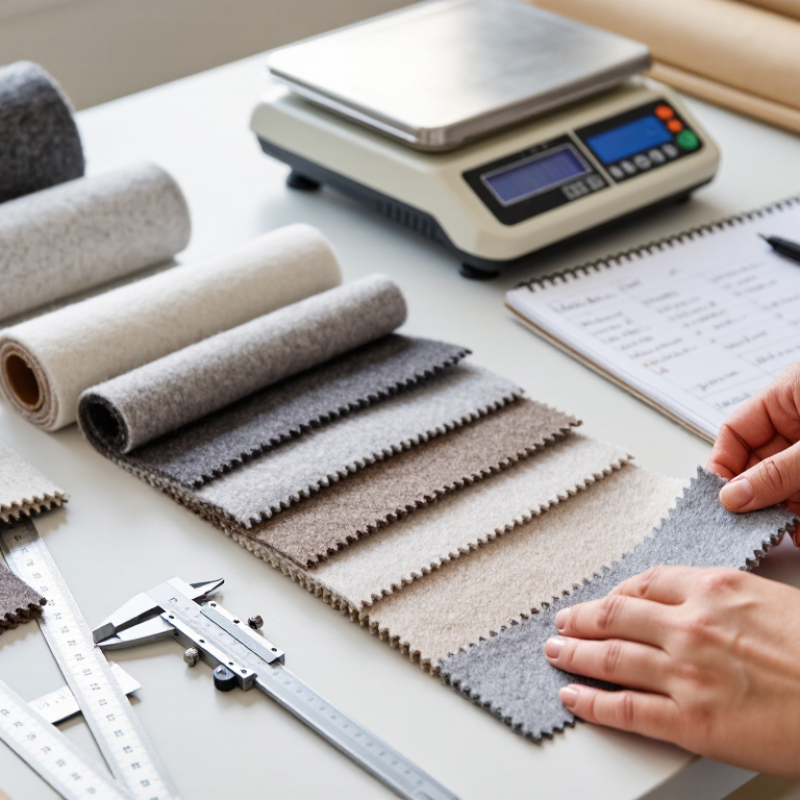
| 02 | Evaluate samples before ordering | Thickness, density, surface uniformity, color, odor, and dimensional stability | Common craft and industrial felt thicknesses include approximately 1–5 mm. Confirm actual thickness and weight across several points because felt can vary within a sheet or roll. | A representative sample, measurement method, approved color swatch, and sample-retention reference | The sample is unusually small, hand-selected, or not made with the proposed production material |
| 03 | Compare customization options | Color matching, thickness, density, sheet or roll format, edge finish, and die-cutting | Custom colors commonly require a minimum quantity and color approval. Die-cut parts require a drawing or dimensioned file, while roll goods require width, length, and winding direction. | Customization matrix, color tolerance, cutting tolerance, tooling cost, setup fee, and approval procedure | Custom features are promised verbally without drawings, tolerances, or approval samples |
| 04 | Clarify order requirements and total cost | MOQ, price basis, packaging, lead time, payment terms, and shipping terms | Minimum order quantities vary widely by color, thickness, format, and customization. Request pricing by square meter, linear meter, kilogram, or finished piece and compare the same unit. | Written quotation, production lead time, sample charge, tooling charge, packaging details, and clearly defined delivery terms | A low unit price excludes freight, tooling, inspection, packaging, duties, or other landed costs |
| 05 | Set quality and compliance requirements | Shrinkage, colorfastness, pilling, flammability, restricted substances, and inspection criteria | Requirements depend on end use. Decorative products may prioritize appearance, while apparel, interiors, toys, and technical products may need additional safety or chemical testing. | Product specification sheet, applicable test reports, acceptable quality limits, inspection checklist, and corrective-action procedure | Compliance documents are undated, unrelated to the material, or cannot be matched to the ordered specification |


 Your message must be between 20-3,000 characters!