| Substrate suitability | Confirm whether the UV-coated panel uses MDF, particleboard, plywood, or another substrate, and whether that construction suits the intended application. | Product specification sheet, substrate description, sample cross-section, and applicable test reports. | Match the substrate, grade, and intended use to the purchase specification; do not compare different substrate types as if they were equivalent. | 15% |
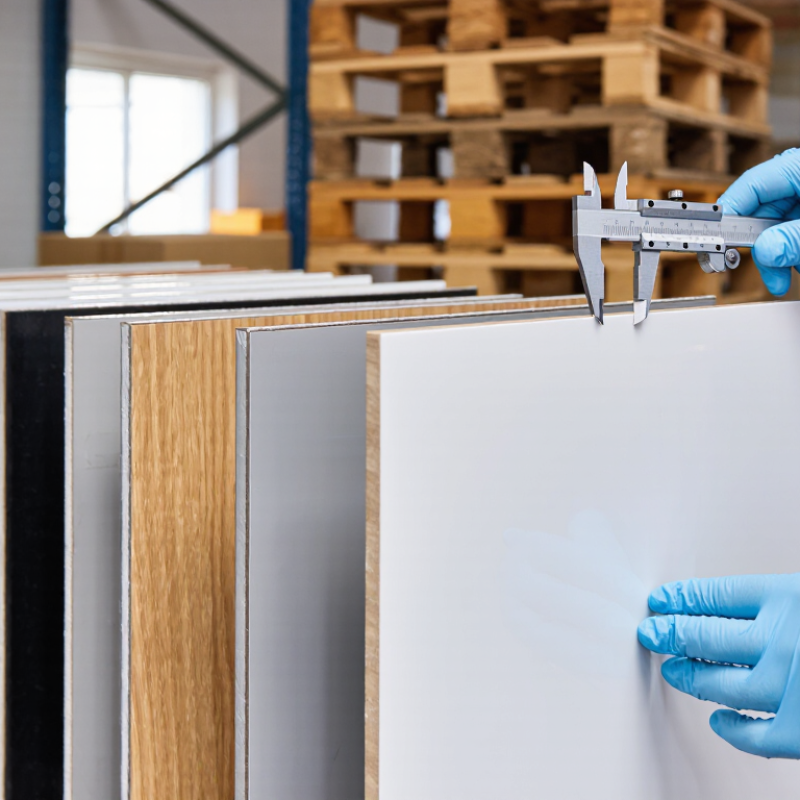
| Dimensions and thickness consistency | Check nominal length, width, thickness, squareness, and consistency between panels and batches. | Documented product tolerances and measurements from a representative sample using agreed inspection equipment and sampling rules. | Set allowable tolerances in the order specification. Compare measured results with those agreed tolerances, rather than assuming one tolerance fits every panel type. | 12% |
| Surface appearance and finish | Inspect gloss or matte level, color consistency, coating uniformity, and visible defects such as scratches, pinholes, bubbles, or uneven edges. | Production samples, approved reference sample, inspection photographs, and a written visual-inspection standard. | Assess samples under consistent lighting and viewing conditions; agree on acceptable defect limits and which panel areas will be visible in the finished product. | 15% |
| Coating adhesion and cure | Evaluate whether the UV-cured coating adheres adequately to the specified substrate and is properly cured for the intended use. | Coating process records and test results using a method agreed by buyer and supplier, with the substrate and test conditions identified. | Require a defined test method and acceptance criteria in advance. Results can depend on the coating system, substrate, and test procedure. | 12% |
| Scratch, abrasion, and stain performance | Check resistance to the types of surface wear and common substances expected in the product’s actual use environment. | Test reports that identify the method, test conditions, panel finish, and tested substances; sample testing where necessary. | Specify performance needs by application. Do not treat a result from one test method as directly comparable to a result from a different method. | 12% |
| Moisture and dimensional stability | Assess how the panel responds to expected humidity or moisture exposure, including any risk of swelling, warping, or edge deterioration. | Substrate-specific test data, installation guidance, and details of edge sealing or other moisture-protection requirements. | Match the panel to the expected indoor or other specified environment. Confirm whether exposed edges require sealing and avoid assuming all UV-coated panels are waterproof. | 10% |
| Compliance and traceability | Verify that the supplied product meets destination-market requirements and that the production batch can be identified. | Applicable declarations, current test reports, production or batch identification, and supporting documentation for the specified product. | Check document scope, dates, product construction, and issuing body. Confirm that the documents apply to the exact panel being purchased. | 10% |
| Quality control and corrective action | Review how incoming materials, coating operations, finished panels, and nonconforming products are controlled. | Documented inspection procedures, sample inspection records, defect-handling process, and responses to buyer complaints. | Ask for records relevant to the ordered product and agree on pre-shipment inspection, sampling, and corrective-action steps. | 7% |
| Packaging and export readiness | Check protection against abrasion, impact, moisture exposure, and movement during handling and transport. | Packaging specification, pallet or crate details, loading photographs, and confirmation of panel-face protection. | Approve packaging for the shipment route and handling conditions; specify labeling, quantity per package, and any special storage instructions. | 7% |


 Your message must be between 20-3,000 characters!