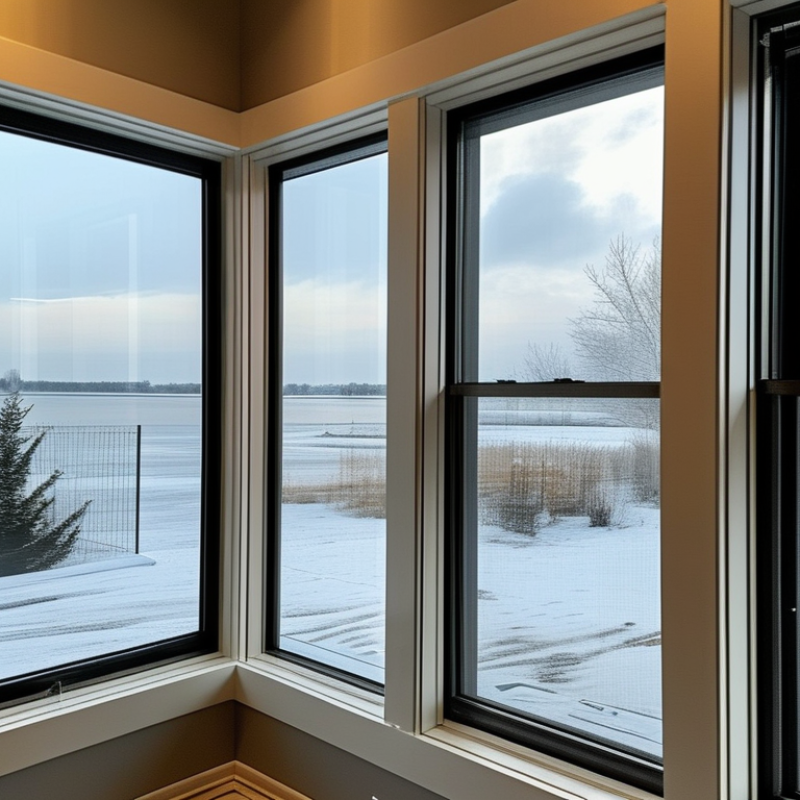
| Interior Acrylic Panel | Single acrylic sheet mounted on the room side of the existing window; commonly removable or magnetic. | Often not NFRC-certified as a complete product. Request tested whole-assembly data when available. | 0.45–0.70 | 0.55–0.75 | 0.70–0.85 | Look for a tested value in cfm/ft² at 1.57 psf. A tight perimeter seal is especially important because the panel is installed indoors. | Rigid perimeter frame, durable compression gasket, stable attachment points, and no visible bowing or gaps. | Rental properties, historic façades, difficult exterior access, and seasonal installation. |
| Interior Low-E Glass Panel | Single or laminated low-emissivity glass panel fitted inside the existing window opening. | Prefer a complete-assembly NFRC label showing U-factor, SHGC, and VT. Do not rely only on center-of-glass values. | 0.30–0.50 | 0.35–0.60 | 0.55–0.75 | Choose a documented low air-leakage assembly and verify that the interior gasket remains continuously compressed. | Thermally stable frame, continuous weather seal, secure corners, and drainage or condensation-management provisions where applicable. | Cold climates, noise reduction, preservation projects, and homes where exterior installation is impractical. |
| Exterior Clear-Glass Storm Window | Single clear glass pane in an exterior aluminum or composite frame; may be fixed, two-track, or triple-track. | NFRC certification is preferable, particularly when comparing U-factor and SHGC between products. | 0.45–0.65 | 0.55–0.75 | 0.70–0.85 | Prefer a tested value at or below 0.30 cfm/ft² at 1.57 psf when the manufacturer provides this information; lower is better. | Perimeter compression seals, corrosion-resistant fasteners, robust corner joints, weep paths, and a secure sill installation. | Moderate climates, seasonal protection, and existing windows that are sound but drafty. |
| Exterior Low-E Glass Storm Window | Single low-emissivity glass pane, usually with a coated surface protected within the storm-window assembly. | Strongly recommended
Verify the NFRC label for the complete installed configuration. | 0.25–0.45 | 0.25–0.55 | 0.45–0.70 | Compare certified or laboratory-tested air-leakage values; use the lowest practical value without compromising operability or drainage. | Thermally improved frame, continuous seals, protected low-E coating, properly designed weep holes, and secure fasteners. | Heating-dominated climates, energy retrofits, and projects seeking a balance between insulation and daylight. |
| Exterior Triple-Track Storm Window | Two movable glass or screen sashes plus a fixed panel; provides seasonal ventilation and flexibility. | Verify that the rating applies to the complete triple-track assembly, not only to individual glazing. | 0.35–0.60 | 0.40–0.70 | 0.55–0.80 | Inspect meeting-rail seals, sash interlocks, corner joints, and the sill. These locations commonly affect air leakage. | Positive sash locks, durable pile or compression weatherstripping, smooth operation, corrosion resistance, and adequate drainage. | Homes requiring ventilation, removable screens, and continued access to the existing window. |
| Exterior Fixed Low-E Panel | Non-operable low-E glass panel permanently or semi-permanently installed over the existing window. | Preferred for comparison
Use whole-unit NFRC values where available. | 0.25–0.40 | 0.25–0.50 | 0.45–0.70 | Fixed units can achieve low leakage when the perimeter is continuously sealed and correctly installed. | Rigid frame, continuous perimeter seal, compatible expansion allowance, protected drainage, and no metal-to-glass stress points. | Maximum insulation, noise reduction, and windows that do not need regular opening. |
| Exterior Laminated-Glass Storm Window | Laminated glass designed to improve impact resistance and acoustic performance; thermal values depend on the complete assembly. | Confirm NFRC ratings and any separate safety, impact, or building-code test reports. | 0.35–0.60 | 0.35–0.65 | 0.45–0.75 | Check the complete frame-and-glass test result; heavier glass requires secure attachment and reliable seals. | Load-rated fasteners, strong corner construction, compatible glazing gaskets, corrosion resistance, and correct support for glass weight. | High-noise locations, elevated impact risk, and projects requiring enhanced glass safety. |


 Your message must be between 20-3,000 characters!