| Primary purpose | Isolating hazardous energy during maintenance, servicing, or repair | A dedicated safety padlock used only for lockout/tagout procedures | A dedicated lock helps prevent accidental removal or use for non-safety purposes. |
| Body material | Indoor areas, general industrial facilities, or locations exposed to moisture and chemicals | Select a material with suitable corrosion resistance, such as anodized aluminum, reinforced polymer, or stainless steel. | Material selection affects service life, weight, visibility, and resistance to the workplace environment. |
| Shackle material | Electrical work, general mechanical work, or corrosive environments | Use a non-conductive shackle where electrical hazards require it; use hardened or corrosion-resistant metal for mechanical and outdoor applications. | The shackle should suit both the hazard type and the physical conditions around the energy-isolating device. |
| Shackle clearance | Disconnects, valves, circuit breakers, or hasps with limited access | Measure the required shackle diameter, vertical clearance, and horizontal reach before purchase. | A lock that cannot pass through the isolation point cannot provide effective lockout protection. |
| Key control | Personal lockout, group lockout, or controlled maintenance programs | Choose a keying system that supports individual control, authorized key management, and documented replacement procedures. | Only the authorized worker should control the key for a personal lockout device. |
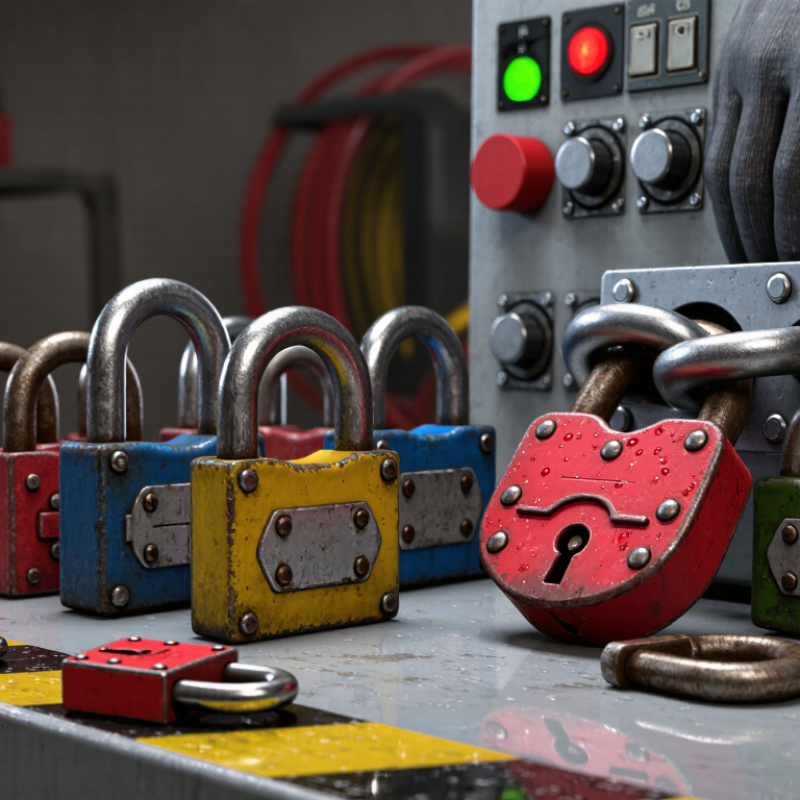
| Color coding | Facilities with multiple departments, shifts, or maintenance teams | Use consistent, high-visibility colors assigned by department, role, or lockout category. | Color coding supports quick identification but should not replace labels, procedures, or worker training. |
| Identification | Individual accountability and multi-worker lockout operations | Provide space for a durable label showing the worker’s name, identification number, department, or contact information. | Clear identification helps determine ownership and supports safe removal procedures. |
| Environmental resistance | Outdoor locations, washdown areas, high humidity, dust, or chemical exposure | Select a lock with corrosion-resistant components and a design that limits water and debris entry. | Environmental damage can make a lock difficult to operate or prevent proper removal. |
| Operating temperature | Cold storage, outdoor winter work, high-temperature areas, or process plants | Verify that the padlock, key, lubricants, and labels are suitable for the actual temperature range. | Extreme temperatures can affect key movement, material strength, and label readability. |
| Electrical suitability | Work near energized equipment or where accidental contact with electrical parts is possible | Follow the site electrical safety assessment and select a non-conductive design when required; do not treat the padlock as electrical insulation unless specifically tested and rated for that use. | Lockout hardware must support the electrical safety procedure without creating additional hazards. |
| Group lockout compatibility | Several authorized workers must maintain personal control of the same energy-isolation point | Use a padlock compatible with lockout hasps, group lock boxes, or other approved group lockout devices. | Each authorized worker should be able to apply and remove their own personal lock according to the site procedure. |
| Tamper resistance | Areas where unauthorized removal or interference is a concern | Choose a robust body, protected shackle design, and a key-retention feature where appropriate. | The lock should remain secured until the authorized removal process has been completed. |
| Inspection and maintenance | All workplaces using lockout/tagout equipment | Inspect regularly for corrosion, bent shackles, damaged bodies, worn keys, blocked keyways, and unreadable labels. | Damaged or unreliable locks should be removed from service and replaced according to the employer’s procedure. |
| Compliance and training | Organizations operating formal energy-control programs | Select hardware that is consistent with applicable regulations, risk assessments, written procedures, and employee training. | A padlock is only one part of an effective lockout program; procedures and training are also essential. |


 Your message must be between 20-3,000 characters!