| 1. Confirm site feasibility | Check zoning, permitted use, access for delivery vehicles, utility availability, drainage, and site preparation requirements before committing to a home design. | Written planning guidance where available; site survey; utility connection estimates; access assessment; preliminary foundation information. | Identify who is responsible for permits, clearing, grading, foundation work, utility connections, and any required local reviews. | Assuming the home can be placed on a property before confirming local requirements and site access. |
| 2. Compare the full project cost | Compare the complete delivered-and-installed scope rather than the advertised home price alone. | Itemized quotation separating the home, transport, crane or unloading, foundation, installation, utility work, permits, taxes, and optional finishes. | Ask which costs are fixed, which depend on site conditions, and how changes or unforeseen work are priced. | Budgeting only for the home package while overlooking site work, connections, delivery, or local fees. |
| 3. Review the contract | Confirm the exact model, dimensions, specifications, included finishes, exclusions, schedule, payment milestones, change-order process, and remedies for delays or defects. | Signed contract and attachments; specifications; plans; finish schedule; warranty terms; written change-order procedure. | Make sure drawings and specifications referenced in the contract are identified by version or date and match the agreed design. | Relying on verbal promises or assuming that showroom features are included in the contracted scope. |
| 4. Verify approvals and compliance | Confirm which building, energy, transport, and installation requirements apply to the property and the home. | Applicable approvals, product documentation, engineering information, inspection schedule, and responsibility assignments. | Check with the relevant local authorities and qualified professionals; requirements vary by location and project type. | Assuming factory construction automatically replaces local permits, inspections, or site-specific engineering. |
| 5. Plan delivery | Review the delivery route, site access, unloading area, delivery sequence, weather contingencies, and responsibility for transport damage. | Delivery plan; access and turning assessment; delivery window; insurance details; written procedure for documenting damage. | Prepare the route and receiving area in advance, and confirm who is present to inspect each unit or component on arrival. | Leaving access planning until the delivery date or accepting visible damage without written documentation. |
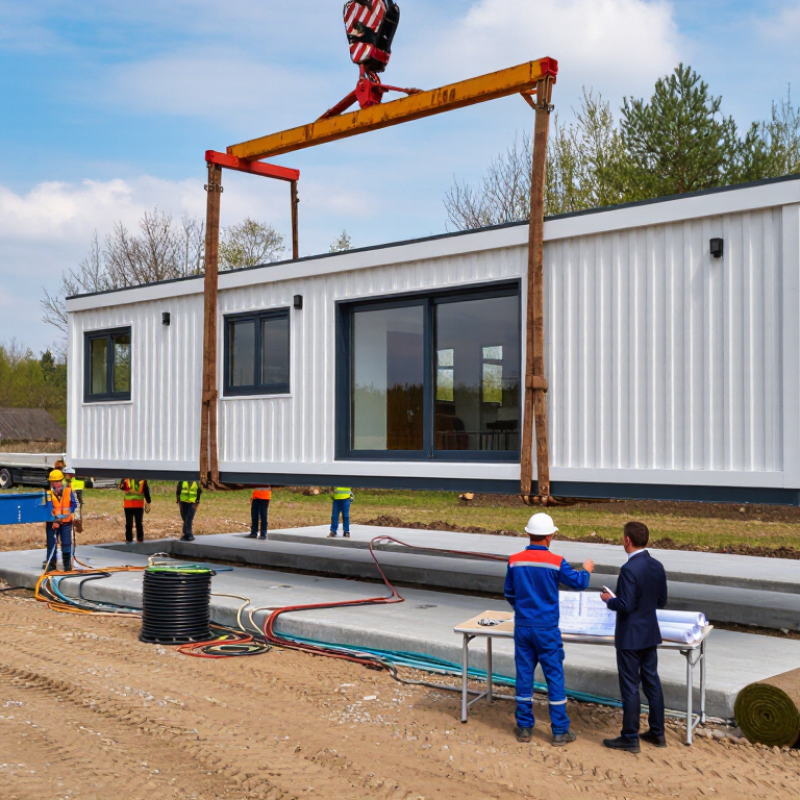
| 6. Coordinate installation | Confirm foundation readiness, lifting arrangements, installer responsibilities, utility connection scope, and coordination with other trades. | Installation plan; foundation acceptance criteria; lifting plan where applicable; schedule; named responsibilities for connections and finishing. | Verify that the foundation and site are ready before delivery and that required inspections are scheduled at the correct stages. | Assuming delivery includes foundation work, utility hookups, finishing, or all work needed for occupancy. |
| 7. Track progress and changes | Keep a record of approvals, selections, schedule updates, site issues, and any agreed changes to the original scope. | Written change orders; updated drawings; dated photographs; meeting notes; payment receipts. | Approve changes in writing before the affected work proceeds, including any cost or schedule adjustment. | Allowing informal changes to create disagreements about price, completion dates, or responsibility. |
| 8. Conduct final inspection | Check completed work against the contract, approved plans, applicable inspection requirements, and agreed finish schedule. | Inspection records where applicable; completion documents; operating instructions; warranty documents; final payment statement. | Test doors, windows, fixtures, appliances included in the contract, and visible utility functions; record incomplete or damaged items. | Making final payment without documenting outstanding defects or confirming required approvals and handover documents. |
| 9. Close out and maintain | Understand warranty coverage, claim procedures, maintenance requirements, and deadlines for reporting issues. | Warranty terms; maintenance guidance; contact and claim process; copies of approved plans and inspection records. | Keep all project records together and report issues promptly using the method and time limits stated in the contract. | Assuming every component has identical warranty coverage or that routine maintenance is included. |


 Your message must be between 20-3,000 characters!