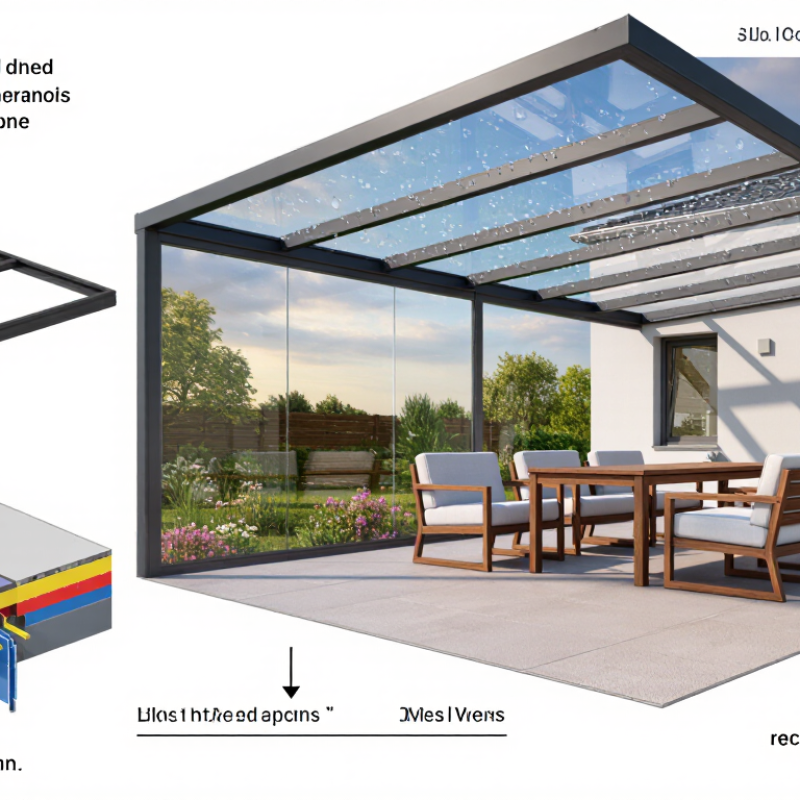
| Basic Definition | A patio cover with roof panels made from transparent or translucent glass, supported by a structural frame. | A roof using relatively opaque materials, such as insulated panels, metal, wood, or other solid construction. | An open-sided structure with spaced or slatted beams that provides partial shade without a continuous roof. |
| Natural Daylight | Excellent. Clear glass can admit most visible daylight, while tinted, coated, or translucent glass reduces glare and brightness. | Low to moderate, depending on skylights, roof openings, and reflective interior surfaces. | Moderate and variable; daylight depends on beam spacing, roof orientation, and the sun’s position. |
| Rain Protection | High when the panels are properly sloped, sealed, flashed, and connected to an effective gutter and drainage system. | Generally high because the continuous roof creates a reliable weather barrier when correctly designed and installed. | Low. Rain can enter through the open spaces between the beams. |
| Solar Heat Control | Variable. Low-emissivity, solar-control, tinted, or laminated glazing can reduce heat and ultraviolet transmission, but unshaded glass may still create strong solar gain. | Usually strong, especially with an insulated roof and a properly sized overhang. | Variable. It may provide useful shade, but low-angle sunlight can pass through easily. |
| Glare and Privacy | Potentially high glare and limited overhead privacy with clear glass. Frosted, patterned, tinted, or shaded glazing can improve comfort and privacy. | Usually provides the strongest overhead privacy and the least direct glare. | Provides limited privacy because the structure is open above and around the sides. |
| Maintenance Needs | Moderate to high. Glass needs periodic cleaning, and seals, joints, gutters, and drainage paths should be inspected for leaks or debris. | Moderate. Maintenance depends on the roof finish, drainage details, exposed fasteners, and local weather conditions. | Low to moderate, although wood versions may require recurring sealing, staining, or painting. |
| Cleaning Frequency | Often several times per year, depending on dust, pollen, tree cover, bird activity, and rainfall. | Usually less visually demanding because dirt is less noticeable from below, although gutters still require cleaning. | Generally limited to removing leaves and maintaining the supporting structure. |
| Weather and Impact Considerations | Must be specified for local wind, snow, hail, and temperature conditions. Laminated or safety-rated glazing can help reduce injury risk if breakage occurs. | Performance varies by material and construction. Structural design must still account for wind, snow, rain, and uplift loads. | Offers limited protection from severe weather because the sides and roof are substantially open. |
| Noise During Rain | Rainfall can sound louder on glass than on some insulated opaque roofs, although laminated or multilayer systems may reduce transmitted sound. | Often quieter when insulation and adequate roof mass are used. | No continuous roof surface, so the acoustic experience is mainly influenced by surrounding surfaces and rain on the ground. |
| Visual Effect | Creates an open, bright appearance and can preserve views of the sky and surrounding landscape. | Creates a more enclosed architectural appearance and may make the patio feel darker. | Provides a light, open structure but does not create a fully sheltered outdoor room. |
| Installation Complexity | High. Accurate framing, drainage, flashing, glazing support, expansion allowances, and water-tight detailing are important. | Moderate to high, depending on span, insulation, roofing material, and attachment to the building. | Usually simpler, especially for small freestanding structures, but footings and anchorage remain important. |
| Relative Upfront Cost | Typically high because safety glazing, structural framing, drainage, flashing, and specialized installation add cost. | Moderate to high, depending on the roof system, structural span, insulation, and finishes. | Often the lowest-cost option when the design is simple and the structure is small. |
| Best Use Case | Homeowners who prioritize daylight, outdoor views, and rain protection and are willing to manage glare, heat, cleaning, and higher installation complexity. | People who prioritize shade, thermal comfort, privacy, and dependable weather protection. | People seeking partial shade, an open-air feel, and a relatively simple outdoor structure. |
| Overall Value Assessment | Worth considering when daylight and appearance are more important than the lowest cost and minimum maintenance. It is less suitable for very hot climates without solar-control glazing, shading, or ventilation. | Often the more practical choice when year-round shade, cooling, privacy, and weather protection are the main priorities. | A strong value for seasonal shade and visual openness, but not a replacement for a fully weatherproof patio cover. |


 Your message must be between 20-3,000 characters!