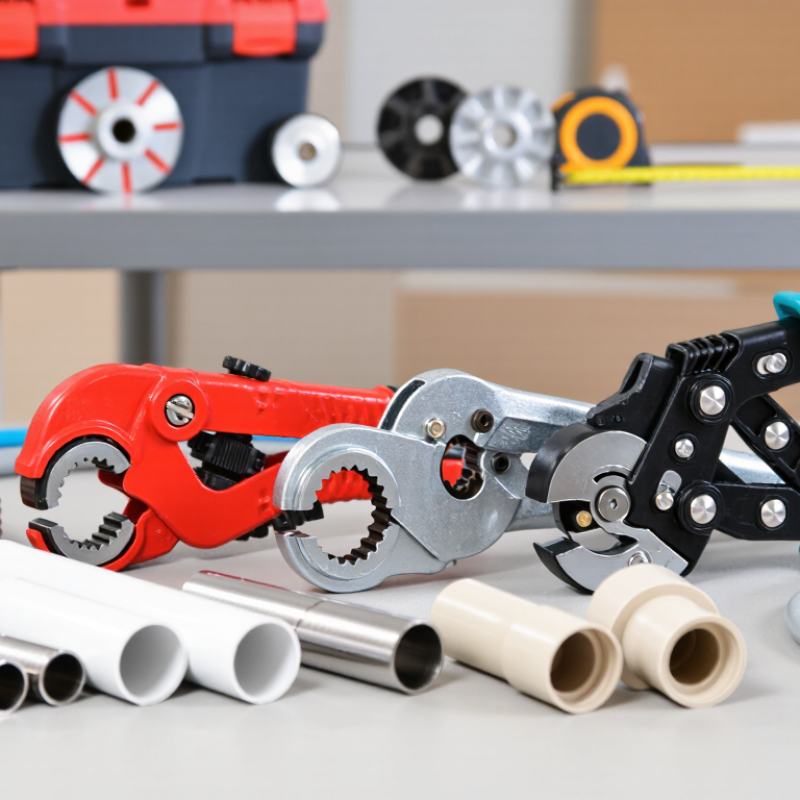
| Ratcheting plastic pipe cutter | Quick, square cuts on small- to medium-diameter plastic pipe | PVC, CPVC, PEX, and some other plastics, subject to the tool’s specifications | Many models handle plastic pipe up to about 2 in. nominal size; confirm the maximum outside diameter | Fast one-handed operation; ratchet action reduces the force needed for thicker pipe | Check approved pipe materials, maximum outside diameter, blade replacement availability, and whether the pipe needs support to prevent crushing |
| Scissor-style plastic pipe cutter | Small-diameter plastic tubing and lighter repair or installation work | Commonly PEX and smaller-diameter PVC or other plastic tubing, depending on the cutter | Usually smaller than ratcheting models; capacity is specific to the tool | Compact, simple, and easy to carry; useful where a larger cutter is unnecessary | Make sure the jaw fully supports the pipe and the tool is rated for its material and diameter; an unsuitable blade can deform the cut end |
| Rotary wheel tubing cutter | Clean, controlled cuts on copper tubing in accessible locations | Copper and, with the correct wheel, some brass or aluminum tubing | Common small models cover roughly 1/8–1 1/8 in. outside diameter; larger cutters are available | Produces a neat cut with little material loss; adjustable cutting wheel follows the tube around its circumference | Match the wheel to the metal and tubing diameter; allow room to rotate the tool and deburr the inside edge after cutting |
| Close-quarters mini tubing cutter | Copper tube near walls, fittings, or other obstructions where a full-size cutter cannot turn | Typically copper tubing; material compatibility depends on the cutting wheel | Often designed for small tubing, commonly around 1/8–7/8 in. outside diameter; check the individual tool | Small turning radius and compact body make it useful in confined spaces | Check the clearance needed to rotate it and the adjustment range; cutting may take more turns than with a standard cutter |
| Heavy-duty steel pipe cutter | Cutting rigid metal pipe during repair or installation work | Steel or galvanized steel pipe when the cutter and wheel are rated for that material | Varies widely by cutter design; check the specified nominal pipe size and actual outside-diameter range | Designed for tougher pipe than standard copper tubing cutters; some models use a long handle or powered drive | Confirm pipe material, wall thickness, wheel type, and available rotation space; follow safe work practices for sharp edges and metal debris |
| Chain pipe cutter | Larger-diameter pipe or locations where a conventional full-turn cutter is impractical | Depending on the model, cast iron, ductile iron, clay, or other specified pipe materials | Model-specific; often intended for larger pipe than handheld tubing cutters | A chain wraps around the pipe, so the cutter can work where space is limited around the circumference | Verify the exact pipe material and diameter range; some chain cutters cut by snapping brittle pipe rather than producing a smooth, saw-like cut |


 Your message must be between 20-3,000 characters!