| Applicable standard | API Specification 5L covers line pipe used in pipeline transportation systems. SSAW describes a helical-seam manufacturing method; it does not replace the requirements of the ordered API 5L specification. | Confirm the applicable API 5L edition, product form, manufacturing route, and project-specific requirements in the purchase specification. |
| Product Specification Level | API 5L distinguishes PSL 1 and PSL 2. PSL 2 generally has additional controls for chemical composition, mechanical properties, testing, and traceability; its requirements vary by grade and product. | Specify PSL 1 or PSL 2 explicitly. Select the level based on the design code, service conditions, and project requirements rather than assuming one level is suitable for every pipeline. |
| Steel grade and strength | Common API 5L grade designations include Grade B and grades such as X42, X52, X60, X65, and X70. The number following “X” corresponds approximately to the minimum specified yield strength in ksi; for example, X52 is about 52 ksi (360 MPa). | Match grade to the pipeline design calculation and governing code. Check the specified yield and tensile requirements for the selected grade, PSL, and product form in the applicable standard. |
| Outside diameter and wall thickness | API 5L pipe dimensions are specified by outside diameter and wall thickness. The suitable combination depends on design pressure, loads, corrosion allowance, installation method, and the project's dimensional requirements. | State outside diameter, nominal wall thickness, dimensional tolerances, length range, and any permitted manufacturing tolerances. Confirm the mill can produce the required combination to the ordered specification. |
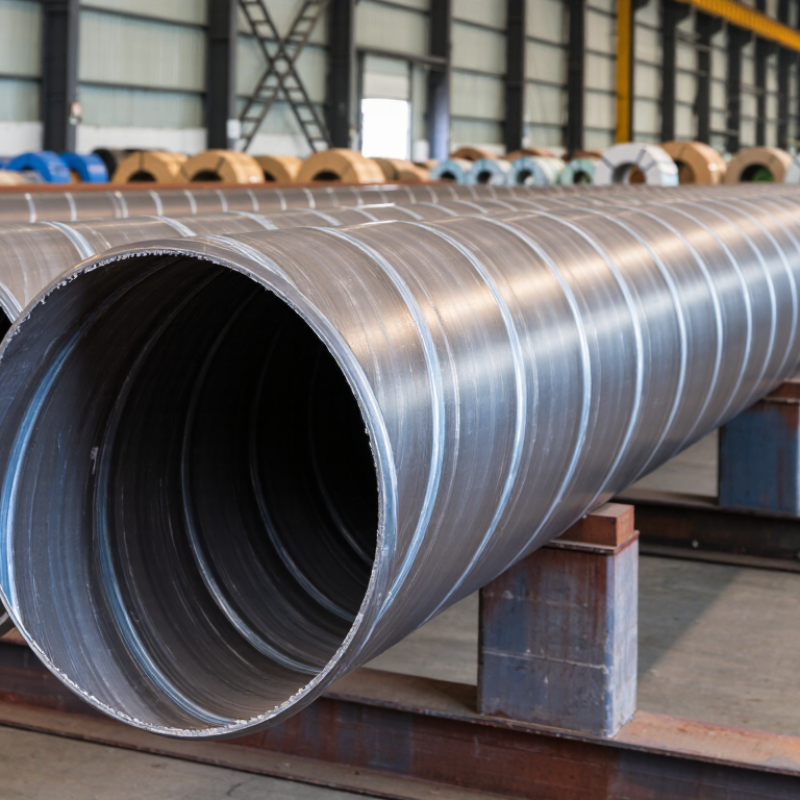
| SSAW seam structure | In spiral submerged arc welded pipe, the strip or plate is formed helically and the seam is welded along the spiral. Submerged arc welding is commonly used for the seam; the exact manufacturing and inspection procedures are mill-specific. | Review the manufacturing procedure, seam-welding controls, weld-repair rules, and required inspection records. Confirm that the ordered pipe is explicitly permitted for the intended application. |
| Weld and pipe-body inspection | Inspection and testing depend on the applicable API 5L requirements and purchase order. Requirements can include nondestructive examination of the seam, dimensional checks, mechanical tests, and hydrostatic testing. | Define the required examination method and extent, acceptance criteria, hydrostatic test requirements, test records, and any additional project inspection or witness points. |
| Low-temperature toughness | Notch-toughness requirements, including Charpy V-notch testing where specified, depend on the selected PSL, grade, pipe dimensions, and service or project requirements. | Specify test temperature, specimen orientation, required absorbed energy, sampling frequency, and any additional fracture-control requirements when applicable. |
| Corrosion and external protection | Carbon steel is not inherently corrosion-resistant. External coatings, internal linings, or corrosion-control measures are separate selection decisions and are not defined solely by choosing an API 5L grade. | Assess the conveyed fluid, soil or seawater exposure, operating temperature, installation environment, and compatibility of any coating or lining system. |
| Typical applications | API 5L line pipe is used in pipeline transportation systems for oil, gas, and other fluids. SSAW pipe may be considered for onshore transmission, water conveyance, and other engineered pipeline projects when its specification and design suitability are established. | Check the governing pipeline code, fluid properties, pressure and temperature conditions, cyclic loading, installation method, and project approval requirements before selecting the pipe. |
| Documentation and traceability | Material identification and inspection documentation support verification that delivered pipe meets the ordered grade, PSL, dimensions, and testing requirements. | Request the required material test reports, heat and pipe identification, inspection records, and documentation specified by the contract. Verify that markings correspond to the purchase order. |
| 2026 purchasing check | Requirements can differ between projects and may be updated through standards revisions, addenda, or contract specifications. A year alone does not determine which edition or technical requirements apply. | Before purchase, confirm the currently applicable API 5L edition and all project amendments with the responsible engineer, design authority, or contract documents. |


 Your message must be between 20-3,000 characters!