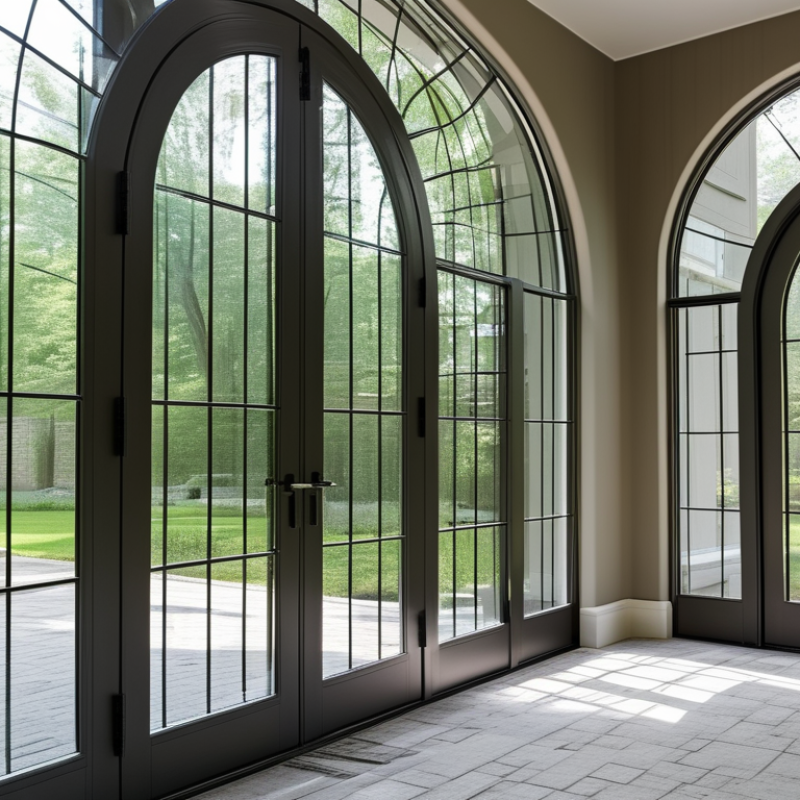
| Create an impressive main entrance | Front entry, foyer, or covered porch | Single or double hinged door with a fixed arched transom or sidelights | Tempered safety glass; laminated glass may be considered where additional security or noise reduction is needed | Clear glass provides the most daylight; low-e coating can improve energy performance | Verify the rough opening, exterior exposure, drainage, weather seals, and sufficient clearance for the door swing |
| Connect an interior room with a hallway | Living room, dining room, study, or home office | Single hinged door or a pair of narrow hinged doors | Tempered clear glass for visibility; laminated or textured glass for improved privacy | Frosted, acid-etched, or patterned glass reduces visibility while still transmitting light | Check nearby furniture, wall switches, trim, and the required latch-side clearance before selecting the handing |
| Separate a bathroom while preserving natural light | Primary bathroom, powder room, or dressing area | Single hinged door with a privacy latch; a framed design is often easier to seal | Tempered obscured glass, such as frosted or rain-pattern glass | Obscured glass limits direct views; curtains or blinds can provide adjustable privacy | Use moisture-resistant hardware and finishes; allow ventilation and avoid door arrangements that block fixtures |
| Brighten a walk-in closet or dressing room | Bedroom-to-closet connection or dressing area | Single hinged door or compact pivot door, depending on available floor space | Tempered clear, lightly tinted, or frosted glass | Frosted glass offers privacy; clear glass maximizes visual openness and daylight | Measure the full opening height, including the arch, and confirm that the door does not interfere with storage units |
| Improve daylight in a narrow corridor | Hallway, passageway, or transition between rooms | Single glazed door with an arched upper panel or a fixed arched glazed opening above the door | Tempered glass; laminated glass is useful when sound control is a priority | Clear glass supports borrowed light; translucent glass provides more visual separation | Confirm wall structure, trim depth, and the location of electrical wiring or plumbing before cutting the opening |
| Create a flexible indoor-outdoor connection | Patio, garden room, sunroom, or covered terrace | Arched-top hinged doors or a custom door paired with fixed glazed panels | Insulating double glazing with low-e coating; safety glass is required for hazardous locations | Low-e glass helps reduce heat transfer; solar-control glass can limit excessive solar gain in sunny exposures | Consider wind exposure, threshold height, water management, frame movement, and compatibility with the surrounding wall system |
| Enhance a commercial or hospitality entrance | Restaurant, boutique, reception area, or event venue | Double hinged doors or a door with fixed arched sidelights, subject to local accessibility requirements | Tempered or laminated safety glass, selected according to impact and security requirements | Clear glass improves visibility and wayfinding; decorative films can add privacy or visual branding without using company data | Confirm required door width, accessible thresholds, opening force, exit routes, hardware durability, and local building-code compliance |
| Increase privacy in a bedroom or private suite | Bedroom entrance, guest suite, or private lounge | Single hinged door with a solid lower section and an arched glazed upper section | Obscured tempered or laminated glass | Textured, frosted, or tinted glass limits views while allowing moderate daylight | Confirm acoustic expectations, latch privacy, door sweep requirements, and whether the arch aligns with existing interior trim |
| Preserve a traditional or heritage-inspired appearance | Period-style home, renovated entry hall, or classic interior | Framed arched door with divided-light panels or a decorative arched transom | Safety glass with simulated or true divided-light detailing, depending on the design and regulations | Clear or lightly textured glass maintains character while controlling visibility | Match the arch radius, frame profile, hardware finish, and surrounding millwork; check whether preservation rules apply |


 Your message must be between 20-3,000 characters!