| Retractable Folding-Arm Awning | Shading patios, terraces, balconies, outdoor dining areas, and seating zones attached to a building. | Adjustable shade Wall-mounted spaces | Good protection from sunlight and light rain when fully extended; should usually be retracted during strong wind. | High control because the fabric can be extended or retracted as needed. | Flexible coverage, clear space below, and a compact appearance when closed. | Requires a suitable supporting wall and adequate clearance for the arms and fabric slope. |
| Cassette Retractable Awning | Providing a cleaner, more protected shading solution for residential terraces and premium outdoor seating areas. | Neat appearance Frequent use | When closed, the cassette helps shield the rolled fabric and components from dust and weather exposure. | Very high control, with variable extension for changing sun angles. | Protective housing, streamlined design, and improved storage of the fabric when retracted. | Usually costs more and may require more precise installation than an open-frame model. |
| Drop-Arm Awning | Shading windows, narrow balconies, façades, and small vertical openings. | Windows Narrow areas | Provides useful sun protection and some shelter from light rain, depending on fabric angle and installation. | Good vertical sun control, especially for reducing glare through windows. | Space-efficient, simple to operate, and suitable for narrow elevations. | Offers less horizontal coverage for furniture or large terrace seating areas. |
| Vertical Screen Awning | Reducing low-angle sunlight, glare, wind exposure, and loss of privacy along the sides of a terrace. | Privacy Wind screening | Can block sunlight and moderate breezes; performance depends on fabric openness, anchoring, and local wind conditions. | Excellent side-light control and useful privacy adjustment. | Improves comfort at the edges of outdoor rooms and helps limit direct lateral sun. | It is mainly a vertical screen, so it does not replace overhead terrace shading. |
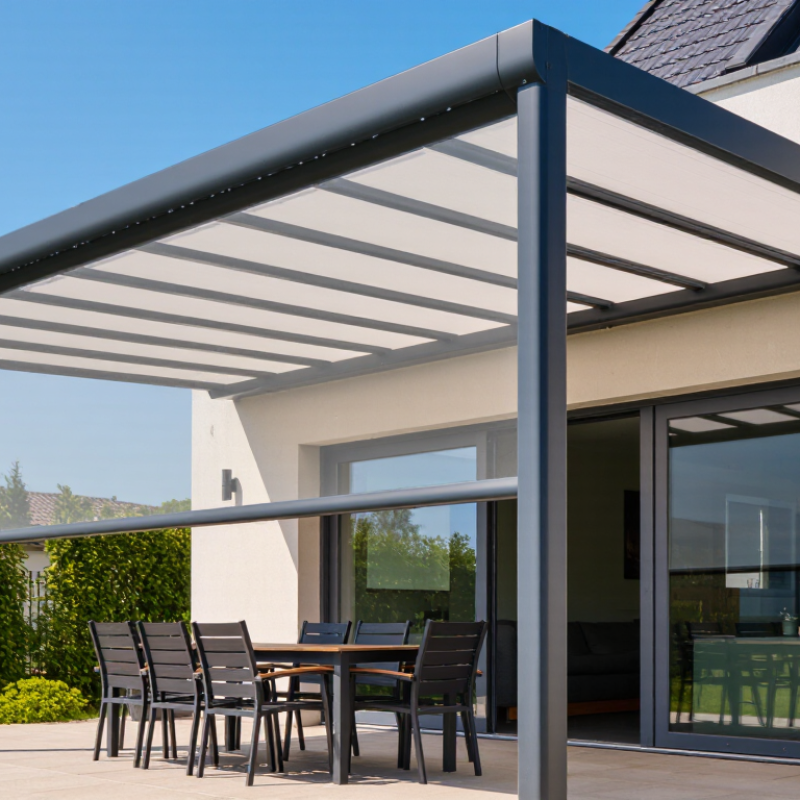
| Pergola Awning | Covering larger terraces, outdoor kitchens, garden seating areas, and spaces used for extended periods. | Large areas Outdoor rooms | Can offer stronger rain and sun coverage than a simple wall-mounted awning when properly designed and drained. | High control when the roof fabric or louvres are adjustable. | Creates a defined outdoor room and can support side screens, lighting, and other accessories. | Needs more floor space, structural planning, drainage, and often a higher installation budget. |
| Louvre Roof Awning | Managing sunlight, ventilation, and occasional rain over permanent patios and outdoor entertaining areas. | Year-round use Ventilation | Adjustable louvres can close to shed light rain; water management depends on roof design, seals, and integrated drainage. | Very high control because louvre angles regulate direct sun and airflow. | Durable roof-style construction, adjustable ventilation, and a strong architectural appearance. | More complex and costly than fabric awnings; not every model is designed for heavy snow or severe storms. |
| Fixed Canopy Awning | Providing permanent shade above entrances, walkways, windows, terraces, and commercial outdoor areas. | Permanent coverage Low adjustment needs | Consistent protection from sun and light precipitation, subject to the canopy material and structural rating. | Reliable but less adjustable because the canopy remains in one position. | Simple daily operation, continuous coverage, and fewer moving parts. | Cannot be retracted when full sunlight is desired and must be sized for local wind and snow conditions. |
| Sail Shade | Shading gardens, playgrounds, poolside areas, courtyards, and informal outdoor seating zones. | Open landscapes Creative layouts | Usually provides strong UV and sun protection; waterproof performance varies by fabric and tensioned design. | Good broad-area shade, although coverage changes with the sun's position. | Light visual appearance, flexible shapes, and suitability for areas without a convenient mounting wall. | Needs secure anchor points, correct tension, and seasonal removal or adjustment in severe weather. |


 Your message must be between 20-3,000 characters!