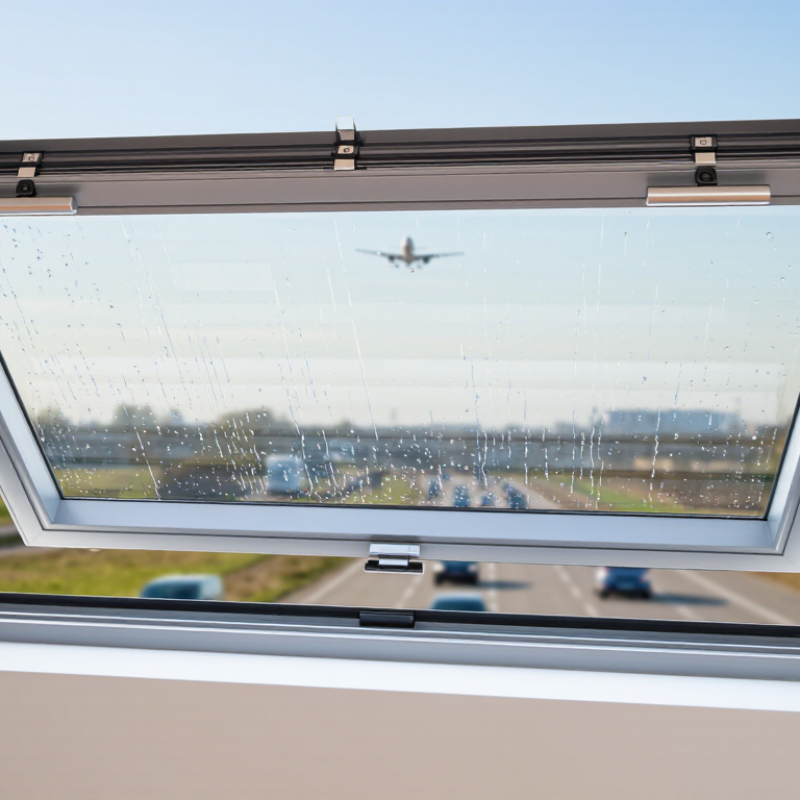
| 1 | Thermally broken aluminium tilt-and-turn window with laminated acoustic double glazing
Typical glass build-up: 6.8 mm laminated / 16 mm air or argon cavity / 6 mm glass | Approximately Rw 40–44 dB; project results depend on frame, seals, installation, and glass composition. | Typical whole-window Uw approximately 1.2–1.6 W/m²·K with an insulated frame and low-emissivity coating. | Urban apartments, offices, schools, and residential buildings exposed to road traffic. | USD 260–520/m² for the window unit, excluding shipping, installation, taxes, and project-specific engineering. | Clean drainage channels and seals annually; lubricate hardware approximately once a year; inspect perimeter sealant. | A high glass Rw value may not represent the acoustic performance of the complete installed window. |
| 2 | Thermally broken aluminium fixed window with asymmetric laminated double glazing
Typical glass build-up: 10.8 mm laminated / 16 mm cavity / 6 mm low-emissivity glass | Approximately Rw 42–46 dB; fixed units generally have fewer air-leakage points than opening units. | Typical whole-window Uw approximately 1.1–1.5 W/m²·K, depending on frame depth and glazing spacer. | High-noise façades, hospitals, hotels, recording-related spaces, and transport corridors. | USD 220–450/m² for the window unit, excluding shipping, installation, taxes, and project-specific engineering. | Low routine maintenance; inspect glass edges, gaskets, drainage, and external sealant during scheduled building inspections. | Large glass areas can increase solar heat gain and weight; structural checks and correct glass handling are essential. |
| 3 | Thermally broken aluminium casement window with acoustic laminated triple glazing
Typical glass build-up: 8.8 mm laminated / 14 mm cavity / 6 mm glass / 14 mm cavity / 6 mm glass | Approximately Rw 44–48 dB when the frame, seals, and installation are acoustically matched. | Typical whole-window Uw approximately 0.8–1.2 W/m²·K. | Cold climates, premium residential projects, energy-efficient offices, and areas requiring both noise and heat control. | USD 360–700/m² for the window unit, excluding shipping, installation, taxes, and project-specific engineering. | Check adjustment of hinges and locking points; clean tracks and drainage; replace damaged gaskets rather than applying excessive force. | Higher sash weight may cause hardware wear or installation problems if reinforcement and load calculations are inadequate. |
| 4 | Thermally broken aluminium lift-and-slide door-window system with laminated insulated glazing
Typical glass build-up: 6.8 mm laminated / 16 mm cavity / 6 mm glass | Approximately Rw 38–44 dB; performance is strongly affected by panel size, interlocks, rollers, and perimeter seals. | Typical whole-element Uw approximately 1.3–1.8 W/m²·K. | Balconies, terraces, hospitality projects, and wide openings where ventilation and access are priorities. | USD 450–900/m² for the unit, excluding shipping, installation, taxes, and project-specific engineering. | Vacuum or brush-clean tracks regularly; keep rollers and drainage free of debris; inspect locking alignment after seasonal movement. | Sliding systems usually provide lower airtightness and acoustic performance than correctly installed hinged systems. |
| 5 | Acoustic secondary aluminium window installed behind an existing primary window
Separate air space typically 100–200 mm, subject to reveal depth and ventilation requirements | Potential additional reduction of approximately 10–20 dB when the original window is reasonably airtight and the air gap is properly designed. | Improves overall thermal resistance, but the final result depends on the existing window and the secondary frame. | Historic façades, retrofit projects, rented properties, and buildings where the external window cannot be replaced. | USD 180–420/m² for the secondary unit, excluding surveys, adaptation work, installation, and taxes. | Maintain both window layers; control condensation; keep the cavity accessible for inspection and cleaning. | Poorly sealed reveals, moisture accumulation, or insufficient opening access can undermine acoustic and durability performance. |


 Your message must be between 20-3,000 characters!